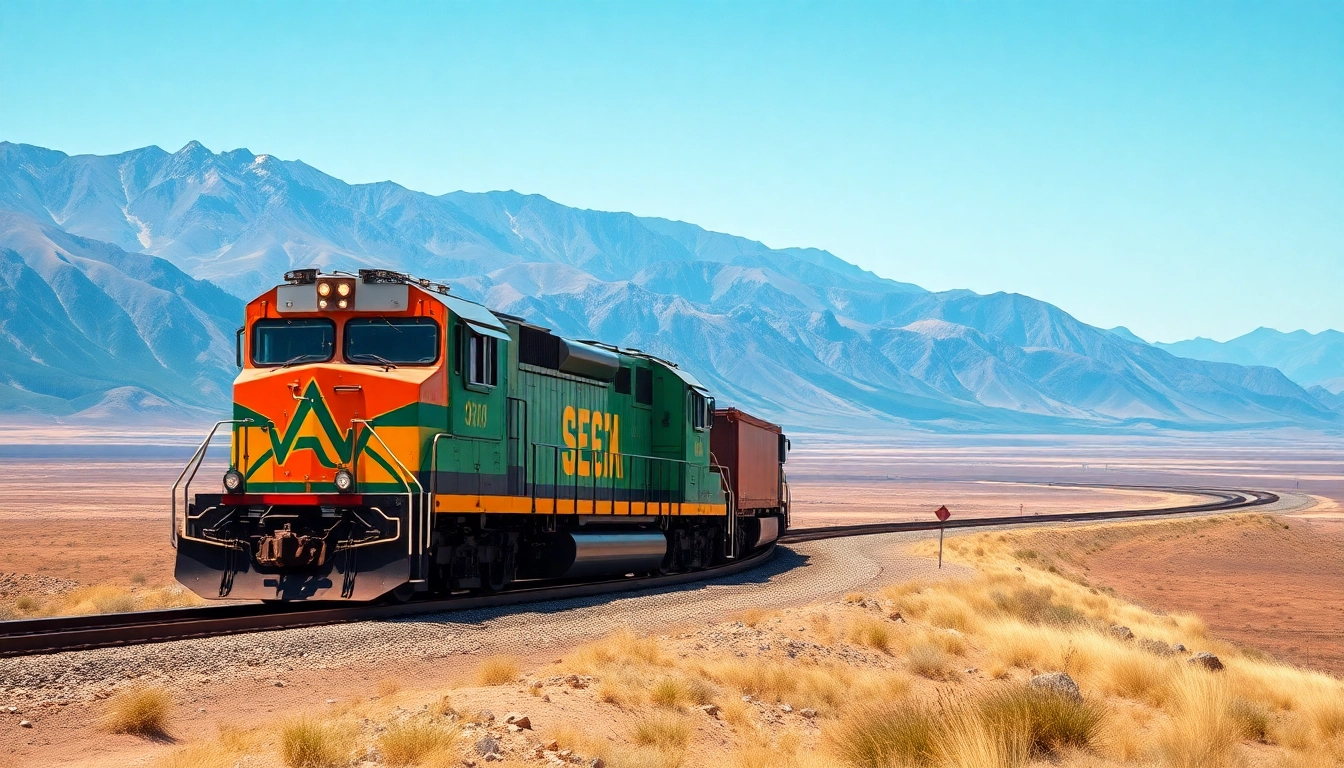
Understanding North American Rail Services
What Are North American Rail Services?
North American rail services encompass a vast network of trains and tracks dedicated to transporting goods and passengers across the continent. These services can be broadly categorized into freight transportation, passenger services, and specialized rail solutions, each catering to different logistical needs and playing a crucial role in the economy. As an integrated system, rail services offer a reliable and efficient means of transport, leveraging extensive infrastructure that has been developed over decades.
Key Components of Rail Services
The key components of North American rail services include several elements critical for their operation. First, the infrastructure—comprising tracks, bridges, and tunnels—forms the backbone of rail transport. Second, rolling stock, which includes locomotives and railcars, is essential for moving goods and people. Third, intermodal capabilities allow for seamless transfer between rail and other transport methods, enhancing efficiency. Lastly, regulatory frameworks and safety standards ensure that operations maintain high levels of safety and efficiency, aligning with industry best practices.
Historical Context of Rail Transportation
The history of rail transportation in North America dates back to the early 19th century. The first railroad began operating in 1826, dramatically transforming the economy and society by connecting distant areas. The expansion of the rail network accelerated, especially during the late 1800s and early 1900s when major railroads emerged, enabling significant economic growth and migration. Understanding this historical context is essential as it highlights the evolution of rail services to their current form, characterized by automation and advanced logistics management.
Benefits of North American Rail Services
Cost-Effective Transportation Solutions
One of the primary advantages of North American rail services is their cost-effectiveness. Rail transport is typically cheaper than road transportation, especially for bulk goods over long distances. The economies of scale afforded by trains, which can transport large volumes of cargo simultaneously, lead to lower per-unit costs. Furthermore, rail networks reduce reliance on trucks, which face higher operational costs due to fuel consumption and driver wages, adding to the attractiveness of rail as a logistical solution.
Environmental Advantages of Rail Transport
Rail transport stands out as a more environmentally friendly option compared to road and air transport. Trains are more fuel-efficient, producing fewer greenhouse gas emissions per ton-mile transported. By using electric trains in some regions, the carbon footprint can be further reduced, paving the way for a more sustainable future. Rail services also help alleviate road congestion, leading to less air pollution and contributing significantly to environmental preservation efforts.
Enhanced Supply Chain Efficiency
Another benefit of North American rail services is their contribution to supply chain efficiency. The ability to transport large quantities of goods over long distances without the delays often associated with road transport makes rail pivotal in logistics. The integration of rail services into broader supply chain strategies allows businesses to streamline operations, optimize inventory management, and reduce transit times while enhancing reliability, ultimately leading to greater customer satisfaction.
Challenges in North American Rail Services
Infrastructure Development Issues
Despite the benefits afforded by rail services, infrastructure development remains a significant challenge. Aging rail networks require substantial investment for maintenance and upgrades. In many cases, funding shortfalls hinder the capacity to modernize tracks, bridges, and stations, impacting service efficiency and safety. Addressing these infrastructure issues is critical for maintaining competitiveness and meeting the growing demands of transportation logistics within North America.
Safety and Regulatory Challenges
Safety is paramount in the rail industry, yet it poses unique challenges. Stricter safety regulations and the urgent need for responsive emergency protocols require constant updates to policies and training programs. The industry must balance operational efficiency with compliance to safety standards, which can sometimes create tension in resource allocation and operational priorities. Ongoing investment in technology and training is essential for overcoming these challenges.
Competition with Other Transport Modes
Rail services also face stiff competition from alternative transport modes such as trucking and air freight. While rail is advantageous for bulk transport, the flexibility and speed offered by trucks present significant competition, especially over shorter distances. As logistics operations increasingly rely on speed and door-to-door delivery, rail services must innovate and improve their offerings to remain a viable option in a competitive market landscape.
Future Trends in North American Rail Services
Technological Innovations Impacting Rail
Technological innovations are transforming North American rail services. Advances in automation, predictive analytics, and AI are enhancing operational efficiency and safety. For instance, real-time tracking systems improve cargo visibility, while automated train control mechanisms reduce the potential for human error. The integration of smart technology into rail operations is expected to optimize schedules, streamline maintenance, and create a more responsive transportation network.
Strategies for Sustainability
As sustainability becomes critical for industries worldwide, North American rail services are adopting strategies to reduce their environmental impact. Initiatives like electrification of rail lines and increased use of biofuels are paving the way for a greener transport system. Investments in sustainable infrastructure that incorporate renewable energy sources will further enhance the ecological benefits of rail services, crucial for long-term viability and corporate responsibility.
Predicted Market Growth
The market for North American rail services is poised for growth. With increasing demand for freight and passenger transport, supported by economic expansion, rail services are expected to capture a larger share of the transport market. Investment in new infrastructure and technology will drive this growth, creating opportunities for innovation and significantly enhancing the efficiency and effectiveness of rail operations.
FAQs About North American Rail Services
What are the main types of North American rail services?
North American rail services typically include freight transport, passenger services, and specialized rail solutions. Each segment plays a vital role in the overall rail infrastructure.
How do North American rail services compare to trucking?
Rail services generally offer lower transportation costs and higher capacity compared to trucking, making them ideal for bulk goods over long distances.
What environmental benefits does rail transport provide?
Rail transport is more fuel-efficient than road transport, resulting in lower greenhouse gas emissions and reduced road congestion.
How is technology shaping North American rail services?
Technological advancements such as predictive analytics and automation are improving scheduling, safety measures, and operational efficiency within rail services.
What challenges do rail services face in North America?
Rail services encounter infrastructure funding issues, heightened safety regulations, and competition from other modes of transportation, impacting operational efficiency.
Contact Information
Call Us:780.400.4104Email: [email protected]Address: 3403 74 AVE NW , T6B 3B8